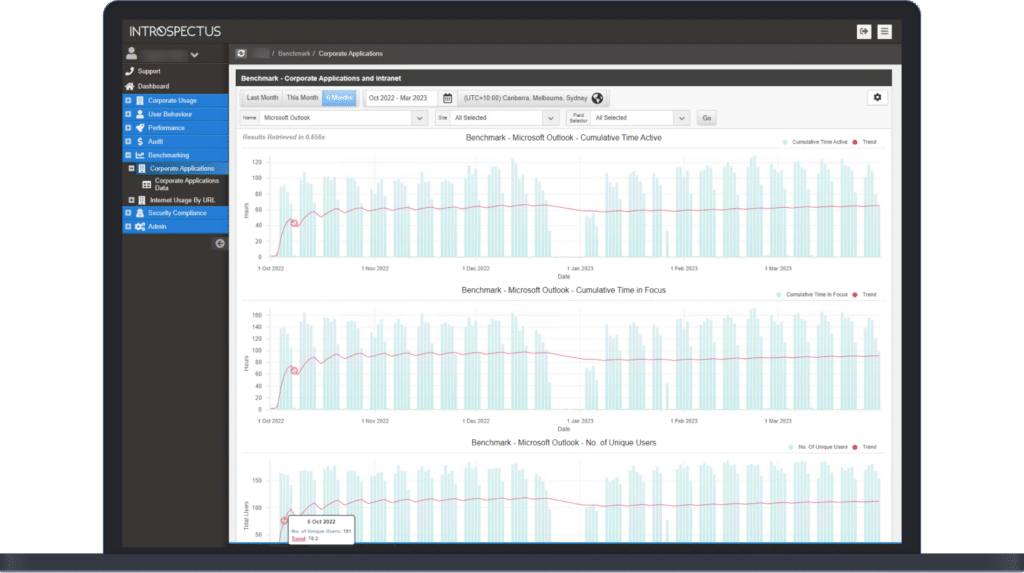




What is Benchmarking and how does it work?
By understanding application usage within an organisation, you can modify your decision-making process to reduce Application Sprawl.
Benchmarking is the practice of comparing business processes and performance metrics to best practices from other companies in the industry. Quality, time, and cost elements are measured and compared.
Benchmarking methodologies use commonly available metrics such as IT labor, hardware and software costs, numbers of devices, and FTE and calculate comparative metrics such as:
- Broad IT spend per head, and per platform
- Numbers of FTE, including different ratios for ICT staff utilisation within an organisation
- Infrastructure metrics such as the number of OS instances, and the number of desktop and laptop devices in an organisation. This includes storage metrics.
Current benchmarking focuses on readily available IT metrics and compares these to similar organisations, typically normalising for variations between different technologies, service delivery models, and skill sets.
This information may be coupled with end-user surveys to try and quantify usage and user experience, asking questions such as:
- Is the application readily available to use?
- Is the application responsive?
- Does the application meet my business needs?
While traditional benchmarking gives an indication of an application’s value to an organisation, the results are not completely evidence-based.